
"I get my PRP hair transplant surgery done at CBLM Hospital by their expert doctor."
Hair Transplant and Hair Treatment at CBLM Holy Family Hospital
Hair Transplant in Jaipur
Get your hair transplant in Jaipur inside a proper multispeciality hospital. Dr. Pankaj Agarwal (MBBS, MS) performs FUE, FUT and DHI under local anaesthesia, you go home the same day, and you get your graft count and cost in writing before you decide.
Book an Appointment
Get expert consultation from our specialists
HAIR TREATMENT IN JAIPUR
Hair Treatment in Jaipur: The Right Option for Your Hair Loss
Not every hair problem needs surgery. Our doctors find the cause of your hair loss first, then recommend the simplest treatment that will work, from medicine and PRP for early thinning to a hair transplant for bald areas.
Hair Transplant
For bald or receding areas. Healthy follicles from the back of your head are moved to where hair has thinned, and they keep growing for life.
Bio-FUE and Bio-DHT
A hair transplant combined with PRP from your own blood, to help the new grafts settle and the scalp heal faster.
PRP Hair Treatment
For early thinning and heavy hair fall. Platelets from your own blood strengthen weak follicles. No surgery, usually 3 to 4 sessions.
Hair Fall Check-Up
Thyroid problems, low iron, low vitamin D and stress can all cause hair fall. The doctor may suggest simple blood tests, and sometimes medicine is all you need.
HAIR TRANSPLANT TECHNIQUES
Choosing the Right Hair Transplant Technique
Every patient's hair loss is different. The surgeon checks your scalp, your donor hair and the result you want before recommending FUE, FUT, DHI or Bio-FUE. Every technique is done under local anaesthesia with same-day discharge.
FUE (Follicular Unit Extraction)
Single follicles are taken one by one from the back of your head with a tiny punch and placed in the thinning area. There is no line scar, so it suits short hairstyles and small to medium areas.
- No line scar left behind
- Back to light work in 5 to 7 days
- Tiny dot marks that fade quickly
- Suits small to medium graft counts
Starting from ₹50,000 · FUE details
FUT (Follicular Unit Transplantation)
A thin strip of skin is taken from the back of the head, divided into grafts under a microscope and implanted. It gives the most grafts in one sitting and leaves a fine line scar hidden under your hair.
- Most grafts in one session
- Suits advanced baldness
- Lowest cost per graft
- Can be repeated if needed
Starting from ₹30,000 · FUT details
DHI (Direct Hair Implantation)
A form of FUE where each graft is loaded into a Choi implanter pen and placed directly, without cutting channels first. It gives fine control over the angle of each hair along the hairline.
- Fine control of the hairline
- No channels cut in advance
- Good for dense packing in small areas
- Precise direction for each hair
Starting from ₹60,000
Bio-FUE and Bio-DHT
FUE or DHI combined with PRP made from your own blood. The PRP is used to support the grafts and the scalp during healing.
- PRP from your own blood
- Supports graft survival
- Helps the scalp heal
- Can thicken nearby natural hair Read About Bio-FUE and Bio-DHT
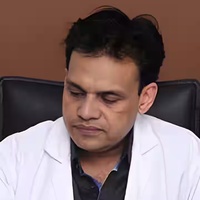
Dr. Pankaj Agarwal
Hair Transplant Surgeon, Jaipur- MBBS (Bachelor of Medicine and Surgery)
- MS (Master of Surgery, General Surgery)
- 10+ Years in Hair Transplant Surgery
- Performs FUE, FUT and DHI
- Plans every hairline personally
10+
Years Experience4.8★
Google RatingMS
General Surgery1 Day
Discharge
YOUR HAIR TRANSPLANT DOCTOR
Meet Your Hair Transplant Doctor in Jaipur
Dr. Pankaj Agarwal is a qualified surgeon, with an MBBS and an MS in General Surgery, who has spent more than 10 years performing hair transplant surgery in Jaipur. He plans every hairline himself, taking your age, face shape and donor hair into account, so the result looks natural now and still suits you years from now.
He will tell you honestly how many grafts you need, which technique suits your scalp, and what result to expect. If a transplant is not the right step for you yet, he will say so and suggest PRP or medicine instead.
He supervises each procedure from the first check-up to the last graft, with a trained team handling graft preparation under magnification.
Pricing
Hair Transplant Cost in Jaipur
Hair transplant cost in Jaipur depends mainly on how many grafts you need and which technique you choose. Here are our current rates per graft, with an example for a typical 2,000-graft session. You get your exact graft count and a written quote after a scalp check.
Technique
Price per Graft
For 2,000 Grafts
FUT (Strip)
₹20 to ₹30
₹40,000 to ₹60,000
FUE
₹30 to ₹45
₹60,000 to ₹90,000
Bio-DHT (Premium)
₹45 to ₹60
₹90,000 to ₹1,20,000
DHI and Bio-FUE
After scalp check
Quoted in writing
Important: These are guide prices. Your final hair transplant cost in Jaipur is confirmed after a scalp check, in writing, with no hidden charges. Want a quick estimate first? Try our hair graft calculator.Get My Personalised Quote
What Changes Your Hair Transplant Cost?
1
Number of Grafts Needed
The biggest factor. It depends on your baldness grade and how dense you want the result to be.
2
Chosen Technique
FUT costs the least per graft. FUE, DHI and the Bio methods take longer and use more equipment, so they cost more.
3
Your Donor Hair
Thick donor hair at the back of the head gives more hair per graft, so you may need fewer grafts for the same coverage.
4
One Session or Two
Very large areas are sometimes done in two sittings, spaced several months apart, which spreads the cost.
5
PRP Add-Ons
PRP sessions before or after surgery can support growth, and are priced separately.
Graft Guide
How Many Grafts Will You Need?
Doctors measure male baldness on the Norwood scale from 1 to 7. This rough guide shows the usual graft range for each stage. The surgeon confirms your number at the check-up.
| Norwood Grade | What It Looks Like | Usual Grafts |
|---|---|---|
| Grade 2 | Slight recession at the temples | 800 to 1,200 |
| Grade 3 | Clear M-shaped hairline | 1,200 to 2,000 |
| Grade 4 | Receding front and a thinning crown | 2,000 to 2,800 |
| Grade 5 | Front and crown bald areas getting closer | 2,800 to 3,500 |
| Grade 6 and 7 | Large bald area across the top | 3,500 or more, often in two sessions |
Want a quick number for your own hair? Use our hair graft calculator.
Compare
Hair Transplant vs PRP Hair Treatment
Both are popular hair treatments in Jaipur, but they do different jobs. Many patients end up using both.
| Factor | Hair Transplant | PRP Hair Treatment |
|---|---|---|
| What It Does | Moves healthy follicles into bald areas | Strengthens weak hair that is still there |
| Best For | Bald patches and a receding hairline | Early thinning and heavy hair fall |
| Sessions | Usually one | 3 to 4 sessions, 4 to 6 weeks apart |
| Downtime | 5 to 7 days before light work | Back to normal the same day |
| Results | Growth from 3 to 4 months, full result by 12 to 18 months | Less shedding within weeks, thicker hair by 3 to 6 months |
| How Long It Lasts | Transplanted hair is permanent | Needs a top-up session every 6 to 12 months |
Read more about PRP hair treatment in Jaipur.
Why Choose CBLMHFH
Why Patients Choose Our Hair Transplant Clinic in Jaipur
A qualified surgeon, a proper hospital and honest advice, from your first check-up until your final result.
Honest Outcome Planning
Before any procedure, the surgeon checks your scalp, draws your hairline with you and explains what result is realistic for your donor hair. If a transplant is not right for you yet, you hear that first.
Proper Surgical Equipment
Magnification for handling every graft, a dedicated graft preparation area and Choi implanter pens for DHI. Grafts spend as little time outside the body as possible.
Quick Recovery
Most patients return to light work in 5 to 7 days. You go home with a written aftercare plan covering washing, sleeping position and medicines.
Hospital-Level Safety
Your surgery takes place inside a multispeciality hospital with an operation theatre, a 24/7 blood bank and an emergency team, not in a standalone clinic room.
Patients From Across India
Patients travel from across Rajasthan and from Delhi, Mumbai and Hyderabad. Outstation patients get an online first consultation and video follow-up after they go home.
Follow-Up Until Full Growth
We check your progress through the 12 to 18 months it takes for the final result, and answer your questions by phone or video along the way.
HOW IT WORKS
Your Hair Transplant Journey at CBLMHFH
Five simple steps, from your first consultation to your final result.
1
Free Consultation
Scalp check, baldness grading, graft count and a written quote from the surgeon.
2
Before Surgery
Simple blood tests, instructions on medicines to pause, and how to prepare your hair.
3
Surgery Day
4 to 8 hours under local anaesthesia. Dr. Agarwal takes, checks and implants the grafts.
4
Recovery
Home the same day. Swelling peaks around day 3 and settles in 7 to 10 days.
5
Final Result
New growth from months 3 to 4, with the full result at 12 to 18 months.
Know Before You Book
Hair Transplant Side Effects and Who Should Wait
Every surgery has after-effects. Here is what is normal after a hair transplant, and when it is better to wait.
Swelling and Scabs
The forehead can swell for 3 to 5 days, and small scabs form over the grafts. They fall off in about 7 to 10 days with gentle washing.
Shock Loss
Between weeks 2 and 8, the transplanted hairs and some nearby hair can shed. This is normal and temporary, and new hair grows back from month 3.
Numbness and Itching
The donor area can feel numb or tight for a few weeks, and the scalp may itch as it heals. Both settle on their own.
Who Should Wait
Very young patients whose hair loss is still spreading, people with too little donor hair, and anyone with active scalp disease or patchy alopecia areata.
Call us straight away if you notice spreading redness, pus, fever or pain that keeps getting worse after surgery. These are rare, but they need to be checked the same day.
Signature Treatment
Hair Transplant Hospital
in Jaipur
At CBLM Holy Family Hospital, every hair transplant in Jaipur happens inside a multispeciality hospital, with a qualified surgeon, local anaesthesia and a 24/7 emergency team on site. Choose from every major technique:
See Full Cost Guide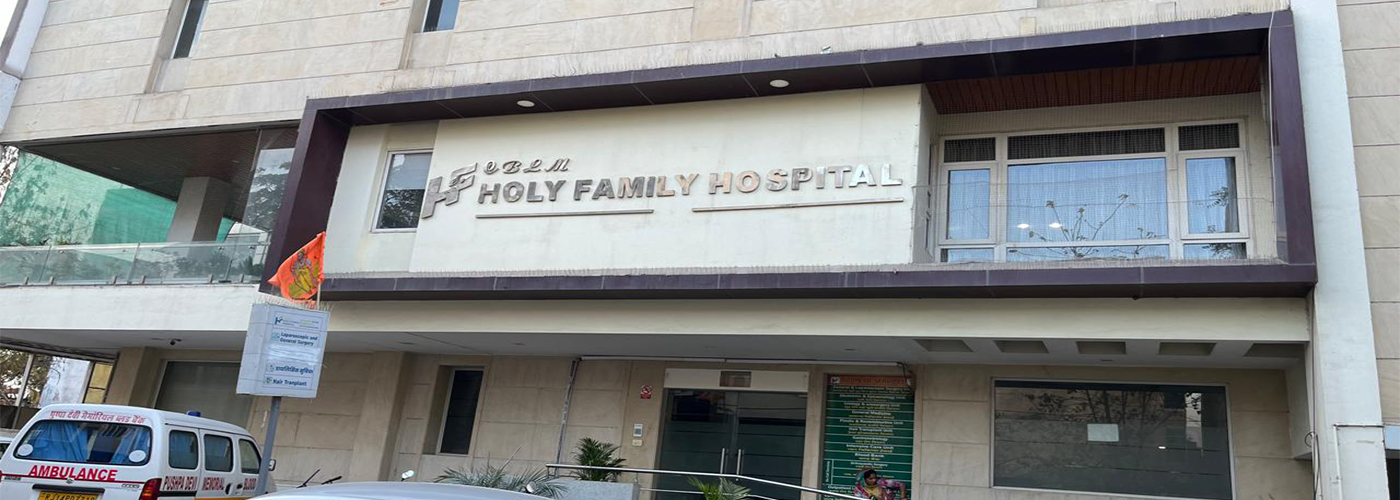
A Hospital, Not a Clinic
Operation theatre, 24/7 emergency team and blood bank under one roof
Location
How to Reach Our Hair Transplant Clinic in Jaipur
Address
43, 52, 53, Ashok Vihar,
Ambabari Bridge, Jhotwara Road,
behind the petrol pump,
Jaipur, Rajasthan 302012
Ambabari Bridge, Jhotwara Road,
behind the petrol pump,
Jaipur, Rajasthan 302012
Phone
WhatsApp
Emergency
24/7 emergency care and blood bank
Open
Hospital open 24 hours, 7 days
Hair consultations by appointment
Hair consultations by appointment
CBLM Holy Family Hospital sits on Jhotwara Road at Ambabari Bridge in Ashok Vihar, a short drive from Vidhyadhar Nagar, Shastri Nagar, Murlipura, Bani Park and Sikar Road. Book a hair consultation and the surgeon checks your scalp, counts your grafts and gives you a written quote the same day.
Coming from outside Jaipur? Take an online first consultation, then visit for the procedure. The hospital is roughly 20 minutes from Jaipur Junction railway station and 40 minutes from Jaipur Airport, depending on traffic.
4.8 ★★★★★ 117 Google reviewsPatient Stories
What Our Patients Say
Thinning Hair or a Receding Hairline?
One scalp check with Dr. Pankaj Agarwal tells you whether you need a hair transplant, PRP or simple medicine, how many grafts it would take and what it will cost.
Book a Hair Consultation +91-96109 58590
COMMON QUESTIONS
Hair Transplant in Jaipur: Frequently Asked Questions
Straight answers about cost, techniques, recovery, results and side effects.
At CBLM Holy Family Hospital, hair transplant in Jaipur is priced per graft: ₹20 to ₹30 for FUT, ₹30 to ₹45 for FUE and ₹45 to ₹60 for Bio-DHT. Most patients need 1,500 to 3,000 grafts, so the total usually falls between ₹40,000 and ₹1,20,000. Small FUT sessions start at ₹30,000. You get your graft count and a written quote after the scalp check.
It depends on the cause. Early thinning and heavy hair fall often respond to PRP hair treatment and medicine prescribed by a doctor. Bald or receding areas need a hair transplant, because lost follicles do not grow back on their own. Our doctor checks your scalp first and tells you which one will actually work.
FUT gives the most grafts in one sitting and suits advanced baldness. FUE leaves no line scar and suits smaller areas and short hairstyles. DHI gives fine control over the hairline. Bio-FUE and Bio-DHT add PRP to help the grafts settle. The surgeon recommends one after checking your donor area and baldness grade.
It depends on your baldness grade and how dense you want the result. As a rough guide, a receding hairline needs 800 to 1,500 grafts, and wider baldness at the front and crown needs 2,500 to 3,500 or more. Use our graft calculator for an estimate, and the surgeon confirms the number at your check-up.
The procedure is done under local anaesthesia, so you feel the injections at the start and very little after that. Most patients watch videos or rest during the surgery. The scalp feels sore and tight for a few days afterwards, which normal pain medicine controls.
Most sessions take 4 to 8 hours, depending on the number of grafts and the technique. You go home the same day with medicines and written aftercare instructions.
Yes. The grafts come from the back and sides of the head, where hair resists the hormone that causes baldness, so they keep growing for life. Your untreated natural hair can still thin over the years, which is why some patients also take PRP or medicine to protect it.
Swelling on the forehead for a few days, small scabs for about a week, some numbness or itching, and temporary shedding of the new grafts or nearby hair, called shock loss. All of these settle with time. Serious problems are rare when the surgery is done in a proper hospital setting.
The transplanted hairs usually shed in the first few weeks, which is normal. New growth starts at around 3 to 4 months, and the full result shows between 12 and 18 months after surgery.
A hair transplant fills bald areas with new follicles. PRP strengthens weak hair that is still there and slows hair fall. People with early thinning often start with PRP, while people with visible bald patches usually need a transplant. Many patients combine the two.
Yes, in suitable cases. Hair loss in women is often spread across the scalp and linked to hormones, thyroid or iron levels, so the doctor looks for the cause first. PRP and medicine are often tried before surgery.
Usually not, because a hair transplant is treated as a cosmetic procedure. Our team explains the full cost before you book, so there are no surprises.
Dr. Pankaj Agarwal, MBBS, MS (General Surgery), who has more than 10 years of experience in hair transplant surgery. He plans your hairline and performs the procedure himself.
Check who actually performs the surgery and their qualifications, ask for the price per graft in writing, see where the surgery takes place, and ask what follow-up you get. A clinic should also tell you honestly if a transplant is not the right option for you yet.
Yes. Patients come from across Rajasthan and cities such as Delhi, Mumbai and Hyderabad. We offer an online first consultation, guidance on where to stay, and follow-up by video call after you go home.