


Post-Procedure
You can go home and return to normal work straight away. Mild tenderness or redness for a day or two is normal and settles on its own. Your next session is booked four to six weeks later.

PRP hair treatment at CBLM Holy Family Hospital, Jaipur uses your own blood to strengthen weak hair roots and slow hair fall. Dr. Pankaj Agarwal checks the cause first. ₹3,000 to ₹8,000 a session, and you go back to work the same day.
Get expert consultation from our specialists
PRP hair treatment in Jaipur at CBLM Holy Family Hospital uses 10 to 20 ml of your own blood. The platelets are concentrated and injected into the thinning parts of your scalp to slow hair fall. Dr. Pankaj Agarwal looks at your scalp first, and if PRP is unlikely to help, he will tell you. A session costs ₹3,000 to ₹8,000.
Hair loss can start at any age. PRP needs living roots to work on, so the earlier you come in, the more hair there is to save.
Thinning on top, or a parting that looks wider than it used to
Round bald patches on the scalp or in the beard
Hair clogging the bathroom drain or left on your pillow
Heavy shedding two or three months after a fever, an operation or childbirth
A hairline creeping back at the temples
PRP stands for platelet-rich plasma. Your blood is spun in a centrifuge for about 10 minutes, which separates the platelets from the rest. That platelet-rich part is then injected into the thin areas of the scalp. Platelets carry growth factors such as PDGF, VEGF and TGF-β, which are thought to help weak roots grow thicker hair.
10 to 20 ml, about the same as a routine blood test
About an hour for the first visit, with around 20 minutes of injections
At about six months, not after the first session
PRP works on hair roots that are still alive, and how well it works depends on what is causing your hair loss. The doctor looks at your scalp, your health history and, when needed, your blood reports before suggesting it.
Male and female pattern baldness, called androgenetic alopecia, is the most common cause. The roots slowly shrink because they are sensitive to the hormone DHT. This is where PRP has the most research behind it, and it tends to work better when started early.
Thyroid problems, PCOS, pregnancy and menopause can all thin the hair, especially in women. The hormone problem is treated first. PRP may be added if thinning carries on, though the response varies.
Low iron, vitamin D, vitamin B12, zinc or protein can add to shedding all over the scalp. A blood test finds this. Correcting the shortfall comes first, and many people need nothing more.
A high fever, surgery, sudden weight loss or severe stress can cause heavy shedding two to three months later, called telogen effluvium. It usually settles on its own within a few months, so PRP is rarely needed. The doctor may suggest it only if the shedding goes on for a long time.
Alopecia areata, fungal infections, psoriasis and lichen planus need their own treatment. Research on PRP for alopecia areata is limited, so it is not a routine choice here, and some cases are referred to a dermatologist.
Areas that have been fully bald for years have no living roots left. PRP will not regrow hair here. A hair transplant in Jaipur is the option to discuss with the doctor.
What the research says
A 2024 review of 14 randomised trials with 431 patients found that PRP increased hair density in pattern baldness, but the studies differed a lot and the authors called for better trials (Kieling et al., Anais Brasileiros de Dermatologia, 2024).
For alopecia areata, a 2022 systematic review found the evidence too low in quality to recommend PRP as a standard treatment (Tejapira et al., Frontiers in Medicine, 2022).
PRP is not for everyone. It suits people who are thinning far better than people who are already bald, and a few health problems rule it out for now.
Most people ask about PRP because they want to slow their hair fall without surgery. It has real advantages, though it does not work for everyone.
Fine needles and a numbing cream. There is no general anaesthesia and no wound to look after afterwards.
The plasma comes from your own blood, so an allergic reaction is very unlikely.
Most of that time is the centrifuge doing its work. You can go back to work the same day.
Some patients see less hair in the comb within a couple of months. Others see no change, and the doctor will be straight with you if that is you.
PRP is usually added to what you already use, such as minoxidil or prescribed tablets, not used in place of it.
After the first course, a session every four to six months can help you hold on to any gain.
Most people need three to four sessions, four to six weeks apart. Results build slowly, so judge PRP at the six-month mark, not after the first visit.
| When | What Happens | What You May Notice |
|---|---|---|
| Week 0 | First session, after your scalp check | Mild tenderness for a day or two |
| Week 4 to 6 | Second session | Some patients see hair fall slow down |
| Week 8 to 12 | Third session | Less hair on the comb and in the shower |
| Week 12 to 18 | Fourth session, if the doctor advises it | Fine new hairs in the thinning areas |
| Month 4 to 6 | Review visit with progress photos | Thicker hair in the treated areas, if PRP is working for you |
| Every 4 to 6 months | Maintenance session | The improvement is kept going |
PRP hair treatment at CBLM Holy Family Hospital costs ₹3,000 to ₹8,000 per session. You get the full cost of your course at the first visit, before any session starts.
| What You Pay For | Cost at CBLM | Good to Know |
|---|---|---|
| One PRP session | ₹3,000 to ₹8,000 | Depends on the size of the area treated |
| Full course of 3 to 4 sessions | About ₹9,000 to ₹32,000 | Sessions are 4 to 6 weeks apart |
| Maintenance session | Same as one session | Every 4 to 6 months, if the doctor advises it |
| PRP with a Bio-FUE or Bio-DHT transplant | Included in the transplant price | PRP is part of these procedures |
The size of the area being treated, the number of sessions the doctor advises, and whether PRP is combined with medicines or a transplant. A small patch at the crown costs less than the whole top of the scalp.
You pay for each session on the day. Most insurance policies and RGHS do not cover PRP for hair loss, because it is treated as a cosmetic procedure. For transplant prices, see our hair transplant cost in Jaipur guide.
These three do different jobs, and plenty of people end up using two of them together.
| Comparison Factor | PRP Therapy | Medicines (Minoxidil, Finasteride) | Hair Transplant |
|---|---|---|---|
| What It Does | Strengthens weak hair roots and slows hair fall | Slows hair loss and supports regrowth | Moves healthy roots into bald areas |
| Best For | Early to moderate thinning | Early to moderate thinning | Advanced baldness with a good donor area |
| Procedure | Injections in the scalp, no surgery | Daily lotion or tablets | Surgery under local anaesthesia |
| Time Off Work | None, back the same day | None | Usually 2 to 3 days |
| When Results Show | 3 to 6 months | 3 to 6 months | 6 to 12 months |
| How Long It Lasts | Needs maintenance sessions | Works while you keep using it | Transplanted hair is usually permanent |
| Common Side Effects | Mild tenderness or redness for 1 to 3 days | Scalp irritation, and hormonal side effects from finasteride in a small number of men | Swelling, small scabs and temporary shedding |
PRP itself is a simple procedure. What changes the result is the diagnosis before it, how the plasma is prepared, and whether anyone checks on you afterwards.
Your scalp is checked by the team led by Dr. Pankaj Agarwal, who also does hair transplants. If a transplant would suit you better, you will hear that.
Your blood is drawn, spun and injected in one sitting, with sterile single-use needles and tubes.
If it looks like pattern baldness, you will not be sent for a long list of tests. If it looks like low iron or a thyroid problem, you will.
Every blood draw and injection is done in a sterile room, with trained nursing staff beside the doctor.
CBLM runs a 24-hour blood bank and emergency department. PRP rarely needs either, but they are there.
Progress photos let you see the change for yourself, and the plan changes if your hair is not responding.
A PRP hair transplant is not a separate operation. It means PRP used with a hair transplant, with the aim of helping healing and the hair around the grafts. The research on this use is still limited, so the doctor treats it as an add-on, not a promise.
Bio-FUE and Bio-DHT transplants at CBLM include PRP in the procedure, so you do not pay for it separately.
Some patients have PRP in the months after surgery to strengthen the hair around the grafts. The doctor advises this at your follow-up visit.
If the hair loss has gone too far for PRP, the same team plans a hair transplant in Jaipur under local anaesthesia.
Hair Transplant Patient Results
Results vary from person to person
From the first check to walking out, a PRP visit at CBLM runs in this order.
The doctor examines your scalp under magnification, asks about your health and medicines, and confirms that PRP suits your type of hair loss. You leave with a clear plan for the number of sessions.
About 10 to 20 ml of blood is taken from your arm, just like a routine blood test.
Your blood is spun in a centrifuge to separate the platelet-rich plasma, which holds several times more platelets than normal blood.
A numbing cream is applied first. The doctor then injects the plasma into the thinning areas with very fine needles. Most people feel pressure or mild pricking rather than pain.
You can go home and return to normal work straight away. Mild tenderness or redness for a day or two is normal and settles on its own. Your next session is booked four to six weeks later.
Small things, but they make each session easier on your scalp.
PRP hair treatment at CBLM Holy Family Hospital is done by the hair restoration team led by Dr. Pankaj Agarwal.
CBLM Holy Family Hospital sits on Jhotwara Road at Ambabari Bridge in Ashok Vihar, a short drive from Vidhyadhar Nagar, Shastri Nagar, Murlipura, Bani Park and Sikar Road. At your first visit the doctor checks your scalp, tells you whether PRP will help and how many sessions you need.
Coming from outside Jaipur? Send your hair photos on WhatsApp first, then plan your visit. The hospital is roughly 20 minutes from Jaipur Junction railway station and 40 minutes from Jaipur Airport, depending on traffic.
4.8 ★★★★★ 124 Google reviewsNoticing More Hair Fall Than Usual?
A short scalp check tells you whether PRP will help, how many sessions you need and what the full course will cost. The sooner you start, the more hair there is to save.
Book a PRP Consultation +91-96109 58590Questions people ask before booking PRP hair treatment in Jaipur.
At CBLM Holy Family Hospital it is ₹3,000 to ₹8,000 a session, depending on how much of the scalp is treated. With three or four sessions, most courses come to about ₹9,000 to ₹32,000. You get the figure for your own course at the first visit.
It is a hair transplant with PRP added, not a separate operation. PRP goes in during the surgery with the aim of helping the grafts settle, and some people have a few sessions afterwards. PRP on its own never moves new roots into a bald area. Only a transplant does that.
The hair restoration team led by Dr. Pankaj Agarwal, MBBS, MS (General Surgery). He has more than 10 years in hair transplant and PRP, and he sees you before your first session.
Less than most people expect. A numbing cream goes on first, and the injections feel like pricking or pressure. The scalp can stay tender for a day or two.
Usually three or four, four to six weeks apart. Some people notice less hair fall within four to eight weeks, and new growth is judged at around six months. If there is no change by then, the doctor will talk to you about other options.
No. PRP can slow hair loss, but it does not switch off the genes and hormones behind pattern baldness. That is why a top-up every four to six months is often advised.
People with a low platelet count or another blood disorder, an active scalp infection, ongoing cancer treatment, or a blood thinner that cannot safely be paused. It is usually put off during pregnancy and breastfeeding as well.
It can. A widening parting or thinning at the crown often responds. Thyroid problems, PCOS and low iron are common causes in women, so a blood test usually comes first.
Yes, unless the doctor tells you otherwise. PRP is an add-on to the treatment you already use, not a replacement for it.
Mild tenderness, redness, swelling or a headache for one to three days is common. Infection is rare when the procedure is done in sterile conditions. Tell the doctor about any blood thinner you take before your session.
Usually not, because PRP for hair loss counts as cosmetic. CBLM accepts RGHS and cashless insurance for eligible treatments, and the front desk can check your policy.
Send photos of your scalp on WhatsApp to +91 96109 58590 first, so the doctor can tell you whether the trip is worth it. The hospital is about 20 minutes from Jaipur Junction railway station.
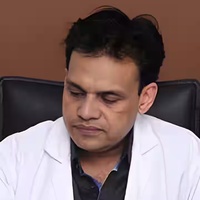
Dr. Pankaj Agarwal MBBS, MS (General Surgery), Lead Surgeon at CBLM
Written by the CBLM Holy Family Hospital team. PRP results vary from person to person, and this page does not replace a consultation with a doctor.