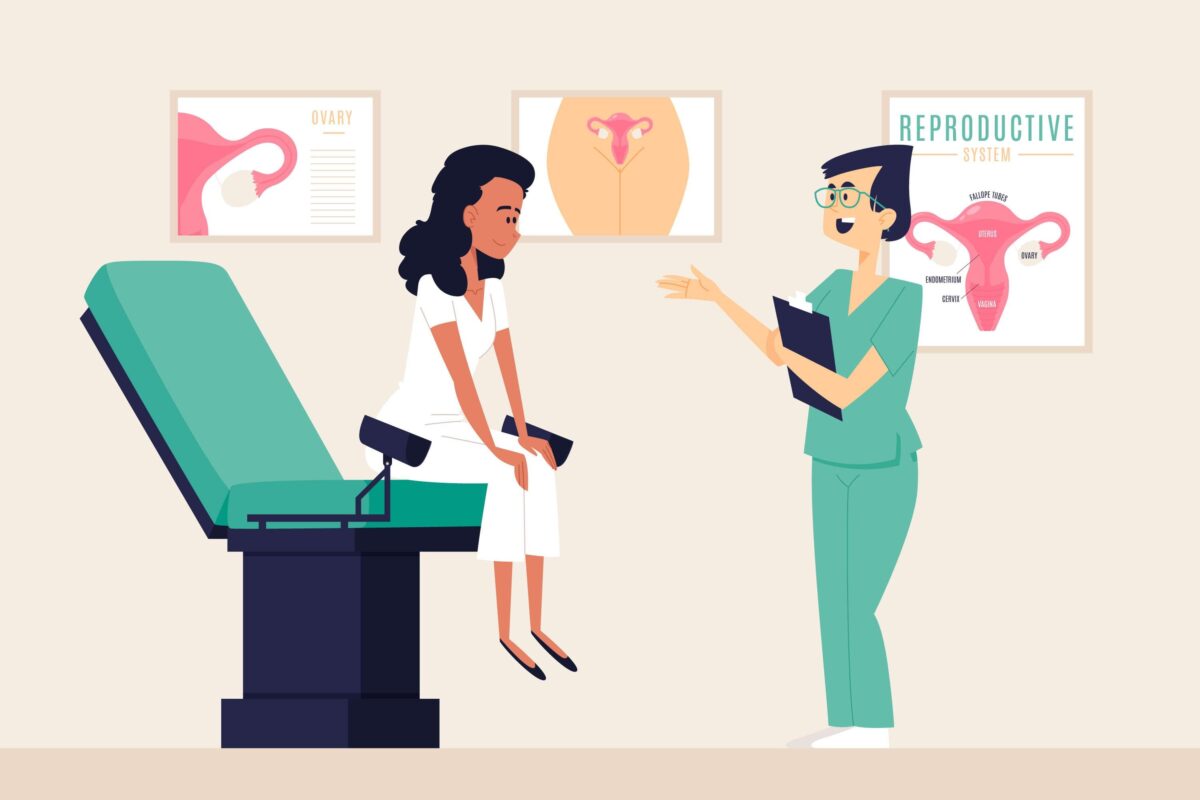
I-Pill Side Effects: Timeline, Common Symptoms & When to Worry
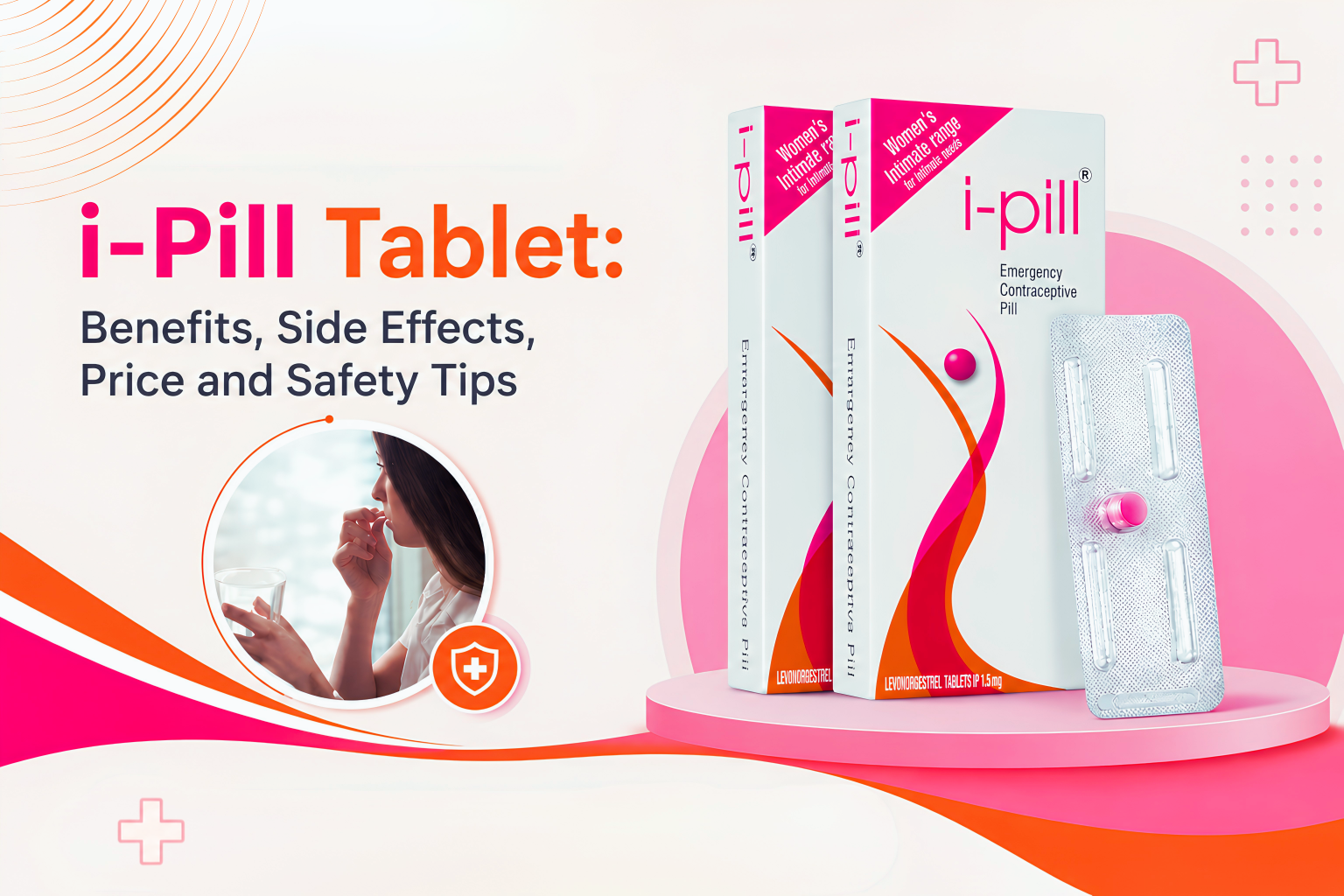
I-Pill Side Effects: Timeline, Common Symptoms & When to Worry
Almost everyone who searches for this has already swallowed the tablet. That changes what you actually need — not a pharmacology lecture, but a straight answer about whether the nausea is normal, why your period is nine days late, and whether one pill has quietly cost you a baby in five years' time.
The short answer
i-Pill's side effects are usually mild and short-lived. Nausea, tiredness, headache, breast tenderness and light spotting are the common ones, and most settle inside 24 to 48 hours. The effect that lasts longest is a disturbed period — it can arrive up to a week early or a week late, and it may be heavier or lighter than usual. i-Pill does not cause infertility, and it cannot end a pregnancy that has already begun. If your period is more than seven days overdue, take a pregnancy test.
What i-Pill actually Does
One tablet. One drug: levonorgestrel, 1.5 mg. It's a synthetic version of progesterone, the hormone your own ovaries make every month, and the dose in that single tablet is roughly what your body handles across a normal cycle — just delivered all at once instead of over three weeks.
It's sold by Piramal Healthcare, it costs somewhere between ₹110 and ₹130 at most chemists in Jaipur, and you don't need a prescription. India made emergency contraception available over the counter in 2005.
Here is the part that gets misunderstood more than anything else on this page. i-Pill works mainly by delaying or blocking ovulation. No egg released means no egg to fertilise. That's the whole mechanism. The International Consortium for Emergency Contraception and FIGO have both stated plainly that levonorgestrel emergency pills do not interrupt an established pregnancy and do not damage a developing embryo.
If you were already pregnant when you took it, the pill did nothing at all — not to you, and not to the pregnancy.
Which also means the reverse is true: if you had already ovulated before you took it, i-Pill had far less to work with. Timing isn't a technicality here. It is the entire game.
Not the same thing
i-Pill is not an abortion pill. The MTP Kit — mifepristone plus misoprostol — is a completely different medicine, it does terminate an early pregnancy, and it is prescription-only for good reason. People conflate the two constantly. Taking i-Pill after a positive pregnancy test will not do anything except make you feel unwell.
The side effects, ranked by how often they actually happen
Package inserts list every symptom ever reported by anyone, which is useless when you're trying to work out whether what you're feeling is expected. So here's the honest ordering, based on the World Health Organization's randomised trials of levonorgestrel emergency contraception and what we see in our own OPD.
| Side effect | Roughly how often | How long it lasts |
|---|---|---|
| Changed period timing | Very common | One cycle, sometimes two |
| Nausea | About 1 in 5 | A few hours to a day |
| Tiredness | Common | 24–48 hours |
| Headache | Common | 24 hours |
| Lower abdominal cramping | Common | 1–2 days, on and off |
| Breast tenderness | Fairly common | Until your next period |
| Spotting between periods | Fairly common | A few days |
| Dizziness | Less common | Hours |
| Vomiting | Around 1 in 20 | Usually one episode |
In the WHO Task Force trial published in The Lancet in 1998, nausea showed up in roughly 23% of women taking the levonorgestrel regimen and vomiting in about 6%. Those numbers have held up well over twenty-five years of use. Notice what isn't on that list: hair loss, weight gain, permanent hormonal damage, "cold uterus", and the dozen other things people are told by relatives. None of them are real.
Important — the vomiting rule
If you vomit within two hours of swallowing i-Pill, assume the dose is gone. You need to take another one. Don't wait to see what happens; the clock on effectiveness is still running.
Why the nausea happens at all
A sudden hormone spike irritates the chemoreceptor trigger zone in your brainstem — the same mechanism behind morning sickness and motion sickness. It's not your stomach reacting to the tablet. Taking it with food helps a little. Taking it on an empty stomach at 3 AM after a stressful night helps not at all, which is unfortunately when most people take it.
What actually happens, hour by hour and day by day
People want a timeline more than they want a symptom list, because a timeline tells you whether you're on track. This is the typical pattern.
First 2 hours
The tablet dissolves and levonorgestrel enters your bloodstream. Peak blood levels arrive at roughly two hours. Some women feel queasy almost immediately; that's usually anxiety rather than the drug, which hasn't fully absorbed yet.
2 to 12 hours
The peak window for nausea, tiredness and headache. If you're going to feel rough, this is when. A lot of women sleep through it, which is honestly the best way to spend it.
12 to 48 hours
Symptoms fade. Mild cramping and breast tenderness may hang around. The drug is being cleared — its half-life is around 26 hours, so by day three there's very little left in you.
Day 3 to day 7
Some women get light spotting. It looks alarming and it is almost always harmless — a small withdrawal bleed as hormone levels drop. It is not your period, and it does not mean the pill worked.
Day 7 to day 21
The waiting. Nothing much happens physically. This is the stretch people find hardest.
Your expected period date, + 7 days
Most women bleed within a week either side of when they expected to. Heavier, lighter, more crampy, less crampy — all of it falls within normal.
More than 7 days late
Take a home pregnancy test. Not tomorrow. Today.
Your period after i-Pill — the part everyone worries about
This is the single most common reason women come to our gynaecology OPD after taking emergency contraception, and it's almost never for the reason they think.
Levonorgestrel interferes with the hormonal rhythm that decides when your uterine lining sheds. Depending on where you were in your cycle when you took the tablet, you can push that date forward or backward. Take it in the first half of your cycle, before ovulation, and your period tends to come early. Take it in the second half and it tends to run late.
Both are normal. Neither means anything is wrong.
What counts as normal
- Period arrives up to 7 days early or up to 7 days late
- Flow that's noticeably heavier than usual, or noticeably lighter
- Cramping that's worse than your baseline for one cycle
- Spotting a few days after the pill, then a proper period on time
- One irregular cycle, followed by a completely normal one
What isn't, and needs checking
- More than seven days late — that's a pregnancy test, no exceptions
- Two consecutive cycles that are wildly off
- Bleeding so heavy you're changing a pad every hour or two
- Bleeding that simply doesn't stop after ten days
- No period at all for six weeks, with a negative test
That last one confuses people. A negative test with no period usually means you ovulated much later than usual that month, so the whole cycle shifted. It resolves on its own. If it doesn't, come in — we'd rather rule out thyroid problems or PCOS than have you sit with it for three months.
Worth knowing
The spotting some women get three to five days after taking i-Pill is not a period, and it is not proof the pill worked. Plenty of women get it and are not pregnant. Plenty get nothing at all and are also not pregnant. The only thing that tells you anything is your actual period, or a test.
Does i-Pill affect future pregnancy?
No. And we want to be blunt about this because the myth causes real damage.
We have sat across from women in their late twenties, married a year, not conceiving, convinced that an i-Pill they took at nineteen is the reason. It isn't. There is no biological mechanism by which it could be. Levonorgestrel is cleared from your body within a few days and leaves nothing behind — it doesn't scar the uterus, it doesn't reduce your egg count, it doesn't block your tubes.
Your fertility returns with your next cycle. Some women conceive in the very same cycle they took the pill, because ovulation was only delayed, not cancelled, and they had unprotected sex again a week later.
The pill isn't why you're not conceiving. Blaming it just delays finding out what actually is.
If you've been trying for twelve months without success — or six months if you're over 35 — that deserves a proper fertility workup, not guilt about a tablet you took years ago. In our experience the real answers are usually thyroid dysfunction, PCOS, low sperm count in the partner (which nobody thinks to check first, and which accounts for something close to a third of cases), or tubal factors after an old infection.
The ectopic pregnancy question
You'll find worrying claims online that i-Pill raises your risk of an ectopic pregnancy — one that implants outside the uterus. The evidence doesn't support that as an increased absolute risk. What is true, and more useful to know: if emergency contraception fails and you do become pregnant, that pregnancy needs to be located. Severe one-sided lower abdominal pain with a positive test is an emergency regardless of what you took. Go to a hospital the same day.
How often is too often?
You'll read that i-Pill is "safe to use as often as needed." Technically that's accurate — the WHO places no medical restriction on repeat use, and there's no cumulative toxicity to worry about. But we think that framing is misleading, and we'll say so directly.
Here's what actually goes wrong with frequent use:
- Your cycle stops being readable. Take it twice in one month and you genuinely cannot tell what's a period, what's breakthrough bleeding, and what's a warning sign. That's not a hormonal injury — it's a diagnostic blackout, and it's how early pregnancies get missed.
- The side effects stack. Nausea and fatigue that were tolerable once become miserable when they're happening every few weeks.
- It's the weakest option you have. Used perfectly, i-Pill still fails somewhere between one and three times in a hundred. A copper IUD fails less than once in a thousand. Combined oral pills, taken properly, are around 1% per year. Relying on emergency contraception as your method means accepting roughly a one-in-five chance of pregnancy over a year of regular sex.
So: taking it three or four times in your life is fine and you should stop worrying about it. Taking it three or four times a year is a sign the contraception underneath isn't working, and that's a fixable problem — a twenty-minute conversation with a gynaecologist, not a lifetime of emergency doses.
When i-Pill works less well than you'd hope
Emergency contraception gets described as though it's a reset button. It isn't. Four things meaningfully reduce how well it works, and most women are never told about any of them.
1. Time elapsed
The 72-hour figure on the box is a deadline, not a window of equal effectiveness. Effectiveness drops sharply across those three days.
| Taken within | Approximate effectiveness |
|---|---|
| 24 hours | About 95% |
| 24–48 hours | About 85% |
| 48–72 hours | About 58% |
| 72–120 hours | Declining further; still worth taking |
At the 60-hour mark you're closer to a coin toss than to protection. Take it as soon as you can — the difference between hour four and hour fifty is enormous.
2. Body weight
This one is under-discussed in India and it matters. Glasier and colleagues, writing in The Lancet in 2010, found that levonorgestrel's effectiveness appears to fall in women with higher body weight, with the signal becoming noticeable above roughly 70–75 kg. European regulators reviewed the data and decided it wasn't strong enough to restrict the drug, but they didn't dismiss it either.
Our practical position: if you weigh more than about 75 kg and you need emergency contraception, a copper IUD is the better choice, and it's available at most hospitals in Jaipur including ours. It is not affected by weight at all.
3. You'd already ovulated
Since the pill's job is to stop ovulation, it has nothing to offer once ovulation has happened. If unprotected sex occurred right in your fertile window, i-Pill's real-world effectiveness in that specific cycle is considerably lower than the headline numbers suggest. Nobody puts this on the box.
4. Other medicines you're taking
Certain drugs speed up how fast your liver clears levonorgestrel, which can leave too little of it circulating to do the job:
- Rifampicin and rifabutin (TB treatment)
- Carbamazepine, phenytoin, phenobarbitone, primidone (epilepsy)
- St John's Wort — sold widely as a herbal mood supplement
- Some antiretrovirals used in HIV treatment
- Griseofulvin (fungal infections)
If you're on any of these, standard i-Pill may not be enough. Doubling the dose is sometimes advised, but that's a decision for a doctor, and a copper IUD is usually the cleaner answer.
The option most people don't know about
A copper IUD inserted within five days of unprotected sex is the most effective emergency contraception that exists — over 99%. It isn't affected by your weight, your timing within the 5-day window, or your other medications. And it then keeps working as regular contraception for up to ten years. It requires a clinic visit and about fifteen minutes. Very few women in India are ever offered it as an emergency option.
When to stop reading and come in
Most i-Pill side effects need nothing more than patience. These don't.
Seek medical care
- Severe, sharp pain on one side of your lower abdomen — same day, no delay
- Bleeding heavy enough to soak a pad every hour for more than two hours
- Fainting, or feeling like you're about to
- Fever with foul-smelling vaginal discharge
- A positive pregnancy test after taking i-Pill
- Your period more than 7 days late, whatever the test says
- Bleeding that continues past 10 days
- Chest pain, breathlessness, or pain and swelling in one calf
Our Gynaecologyt & Obstetrics department runs a daily OPD, and you don't need to explain or justify anything to be seen. Come in, get checked, go home. That's the whole transaction.
What we'd actually suggest instead
We'd be doing a poor job if we ended a 3,000-word page about emergency contraception without saying the obvious thing: the aim is to not need it.
Emergency contraception is a good safety net. It's a bad plan. If you're taking i-Pill more than once or twice a year, the honest fix is a method that works quietly in the background and doesn't require you to make a decision at 2 AM.
| Method | Failure rate, typical use | Suits you if |
|---|---|---|
| Copper IUD | Under 1% | You want years of cover and no hormones |
| Hormonal IUS | Under 1% | You also have heavy or painful periods |
| Combined pill | About 7% | You can take a tablet at the same time daily |
| Condoms | About 13% | You also need protection from STIs |
| Emergency pill only | Very high over a year | Honestly — nobody |
And one more thing that i-Pill does not do: it offers no protection whatsoever against HIV, chlamydia, gonorrhoea, syphilis or HPV. If the unprotected sex was with a new partner, contraception was only half of what you needed to think about. An STI screen roughly two weeks later is a sensible, unglamorous step that most people skip.
Questions we get asked in OPD
How long do i-Pill side effects last?
The physical symptoms — nausea, headache, tiredness, dizziness — almost always clear within 24 to 48 hours. Breast tenderness and mild cramping can linger until your next period. The menstrual disruption is the longest-lasting effect and typically resolves within one cycle, occasionally two.
Can I take i-Pill after 72 hours?
It still has some effect up to 120 hours, but effectiveness falls steeply after 72. If you're past three days, a copper IUD inserted within five days is a far better option and remains over 99% effective at that point.
Is spotting after i-Pill a sign that it worked?
No. Spotting is a hormonal withdrawal bleed and tells you nothing about whether pregnancy was prevented. Some women who spot are pregnant; many who don't spot aren't. Only your period, or a pregnancy test, gives you an answer.
Will i-Pill make me infertile?
No. There is no evidence linking levonorgestrel emergency contraception to reduced fertility, and no mechanism by which it could cause it. The drug is fully cleared within days and your normal cycle resumes immediately afterwards.
What if I was already pregnant when I took it?
Nothing happens. Levonorgestrel doesn't affect an implanted pregnancy or harm a developing embryo. Studies of women who took it without realising they were pregnant found no increase in birth defects or miscarriage.
My period is 10 days late and the test is negative. What now?
Repeat the test after three days using first-morning urine, which is more concentrated. If it's still negative and you still haven't bled, book an appointment. Delayed ovulation is the usual explanation, but thyroid problems and PCOS look identical from the outside and are worth ruling out.
Can I take i-Pill twice in one month?
You can, and it won't poison you. But your cycle will become genuinely difficult to interpret, side effects will be worse, and two doses in a month is a clear sign your regular contraception needs sorting out. Come and talk to us about a method that doesn't need emergencies.
Does i-Pill work if I'm breastfeeding?
Yes. Levonorgestrel is considered compatible with breastfeeding and does not require you to stop or discard milk. Progestogen-only methods are generally the preferred route while nursing.
Do I need a prescription to buy i-Pill in India?
No. Emergency contraceptive pills have been available over the counter in India since 2005 and any pharmacy can sell you one without a prescription.
Latest Blogs








Top 10 Helpful Tips To Treat Piles
17 February
What is Dengue? Symptoms, Causes and Treatment.
17 February
Top 10 Ways To Cleanse Your Body Thoroughly
17 February
Top 10 Ways To Keep Your Kidney Healthy
17 February


Gain complete insight of Piles and Its Cure
17 February
Stress, A Silent Initiator Of Piles Problems!
17 February





How to Find the Best Gynaecologist in Jaipur
17 February